Retaining Wall Installation in Johnson County, KS
Modern Collar builds and replaces block retaining walls across Johnson County from our base at 6651 W 231st St in Bucyrus, Kansas. We build walls that turn sloped backyards into usable space, replace walls that have started to lean, and hold back hillsides and stop erosion on larger lots, from Leawood and Overland Park down to Stilwell, Spring Hill and Louisburg. Every wall follows the block manufacturer’s installation standard: a compacted gravel pad, a buried first course, and drainage stone with a drain pipe behind it. Excavation and grading are part of our scope. Call (785) 776-1122 for a free estimate.
What Goes Into a Johnson County Retaining Wall
Most wall jobs are a mix of these. We plan the wall, the grade behind it and the drainage together.
Block Retaining Walls
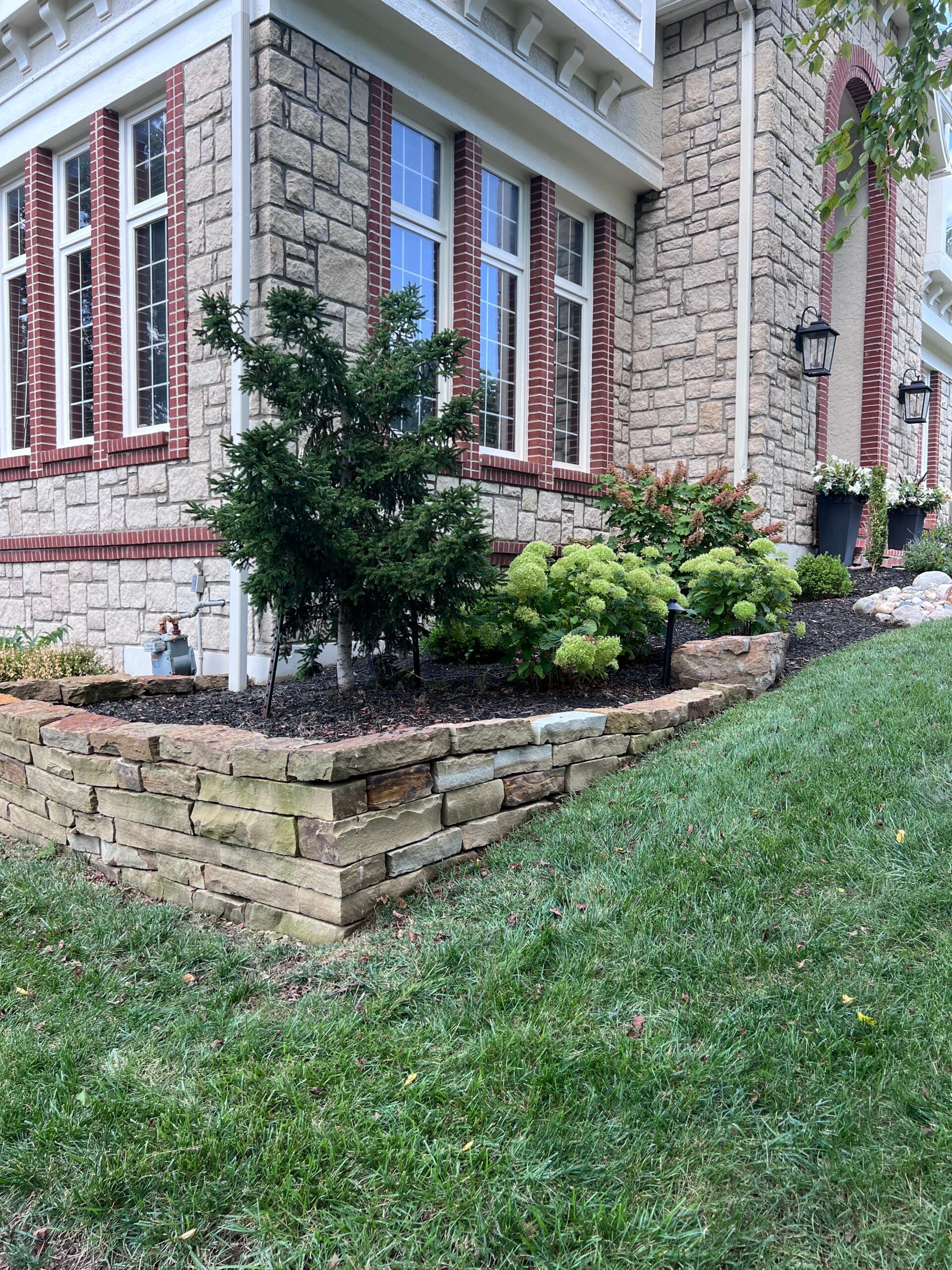
Segmental block walls that hold back soil on sloped yards and create flat, usable ground.
Terraced Yards
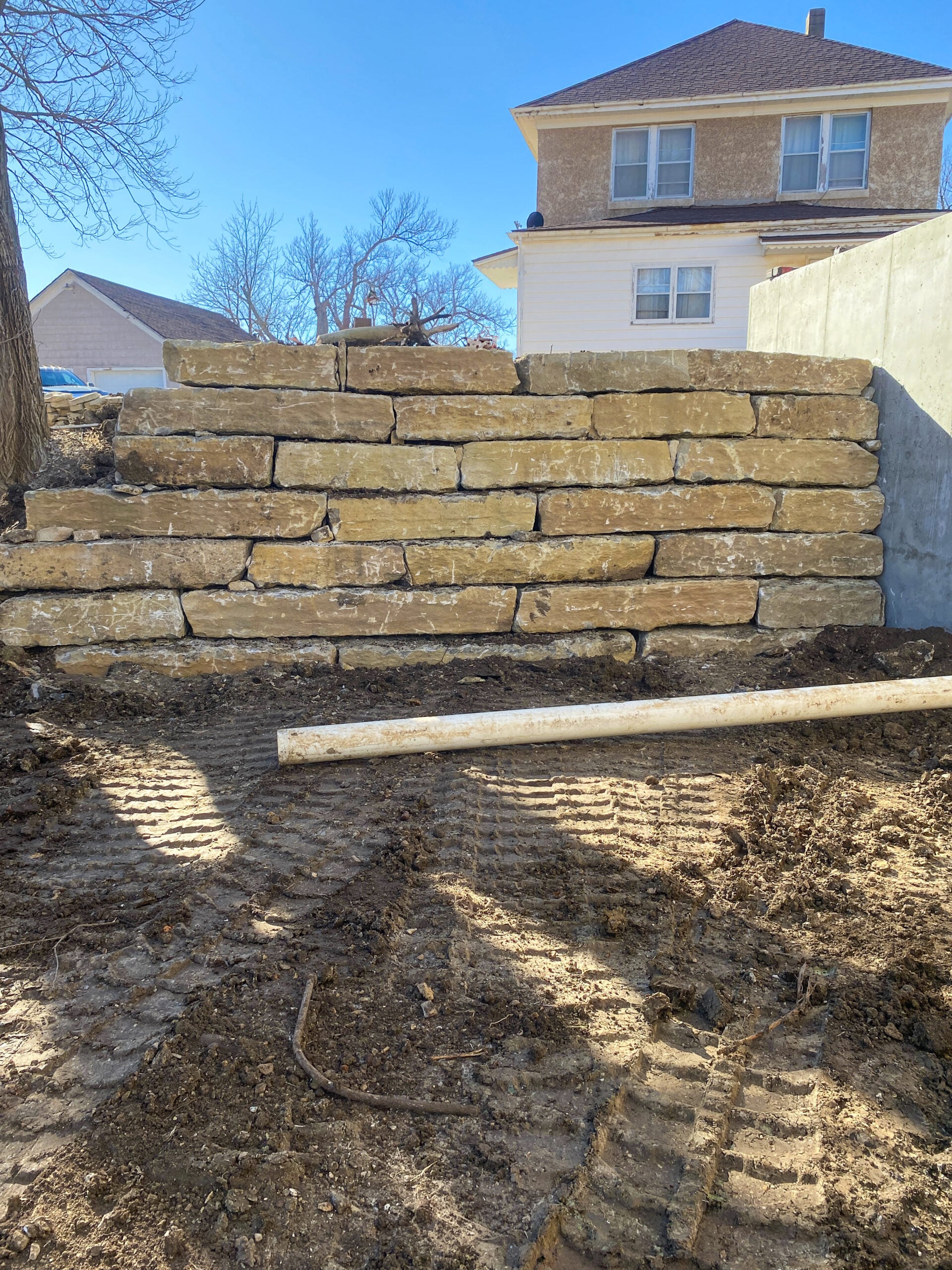
Two or more shorter walls that step a steep yard down in levels instead of one tall wall.
Walls Around Patios
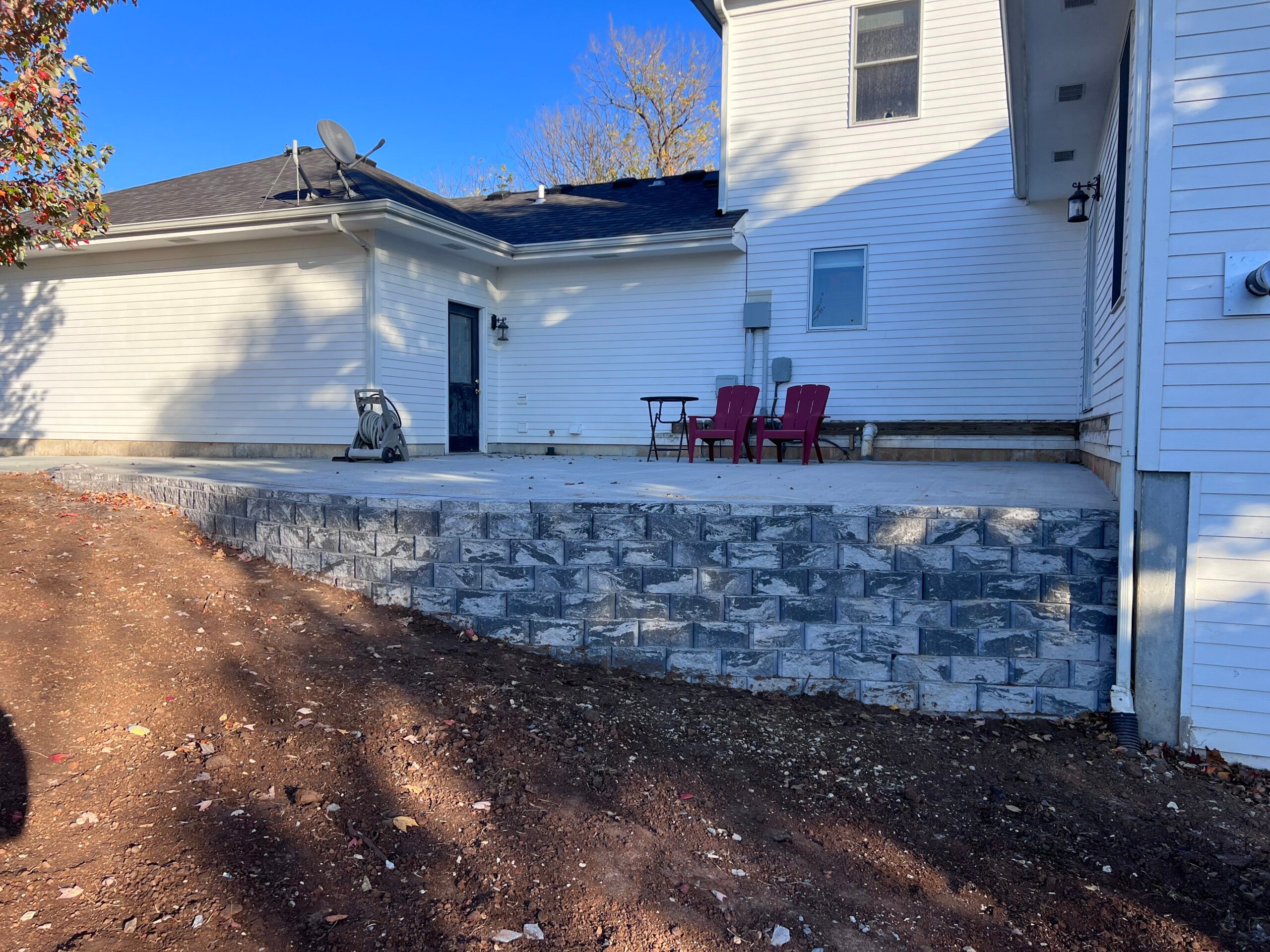
Walls that cut a level pad into a slope for a patio, or wrap the edge of one. See paver patios.
Wall Replacement
Tear-out of leaning timber, railroad-tie or failing block walls, then a new wall on a proper base.
Steps Through a Wall
Block steps built into the wall so you can get from one level of the yard to the next.
Drainage Behind the Wall
Drainage stone, fabric and a perforated pipe so water drains instead of pushing on the wall.
Request Free Quote
Free on-site walkthrough and a written price.
paste after import
Fill out the chat widget
Send us a quick message about your project and we'll reach out to set up your free estimate.
Or call (785) 776-1122
Why Retaining Walls Fail on Johnson County Clay
Clay soil holds water, and wet clay is heavy. When water has nowhere to go behind a wall, the pressure builds until the wall leans, bulges or cracks.
Freeze-thaw makes it worse: water trapped behind the wall freezes, expands and pushes again every winter. That is why so many older timber and block walls around here lean, and why a wall that looked fine for a few years can suddenly move.
The fix is in how the wall is built, and block manufacturers spell it out: a compacted gravel leveling pad at least 6 inches thick, a first course buried below grade, at least 12 inches of clean drainage stone behind the wall, and a perforated pipe at the base to carry water out. Taller walls also need geogrid tied back into the soil and an engineered design. We build to that standard, and if the yard drains toward the wall, we regrade it too. See drainage and grading.
- First course buried below grade
- Compacted gravel leveling pad
- Drainage stone and pipe behind the wall
- Each course set back into the hill
What goes into a Modern Collar retaining wall
Block manufacturer installation standard (Belgard, Nicolock, Anchor). Taller walls add geogrid and an engineered design.
Why Homeowners Choose Modern Collar for Retaining Walls
A retaining wall is only as good as what is behind and under it. On clay soil, the drainage and the base decide whether the wall stays put, so that is where we spend the time.
Drainage Built In
Drainage stone and a drain pipe behind the wall, per the manufacturer standard.
Excavation Is Part of Our Job
Digging, the leveling pad and compaction are in our scope.
Walls and Patios Planned Together
If a patio goes on top or below, we lay out both at once.
The Owner Lays Out the Job
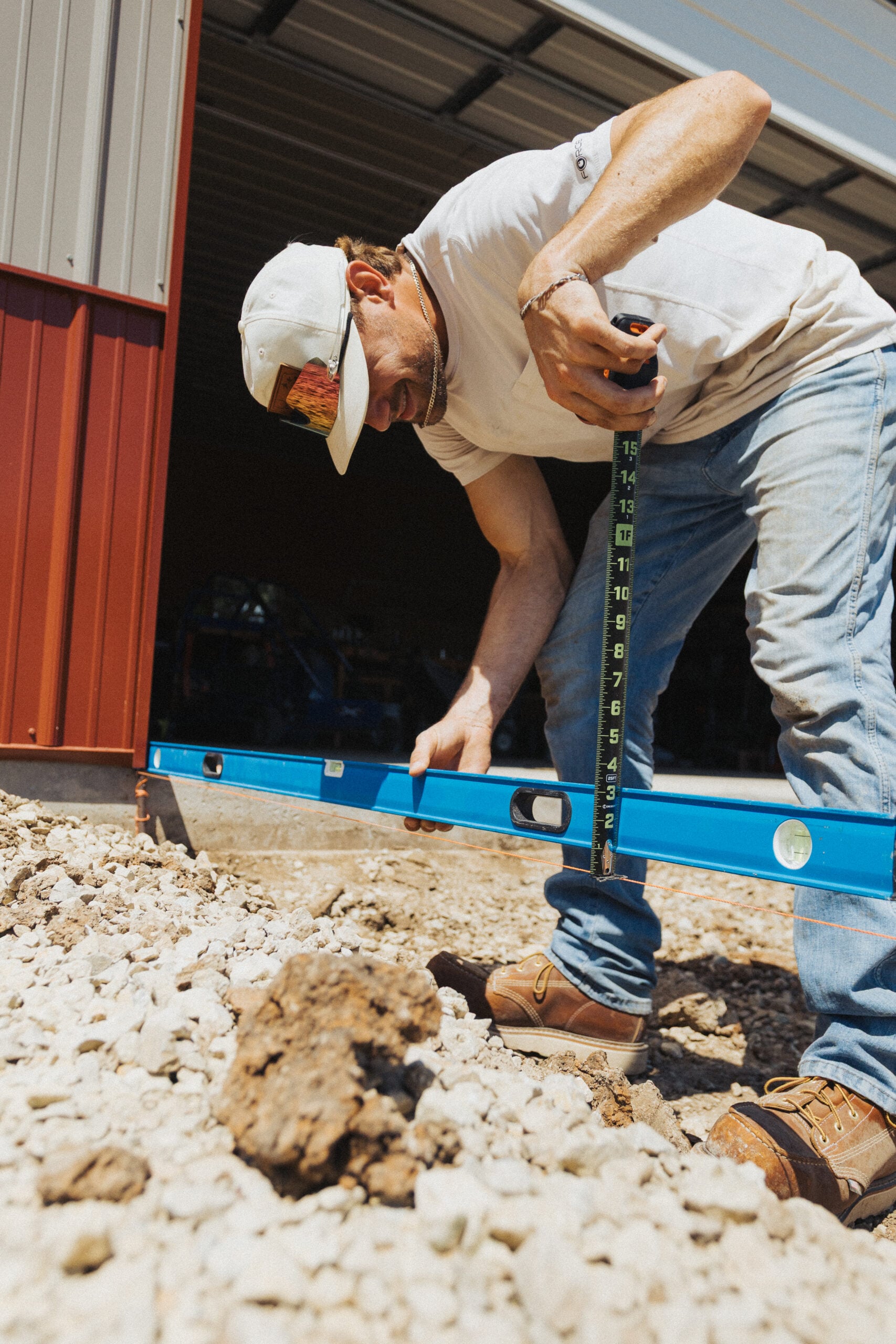
Adler measures the grade and writes the estimate himself.
Our Retaining Wall Process
Free estimates · Written price · Clean site
1
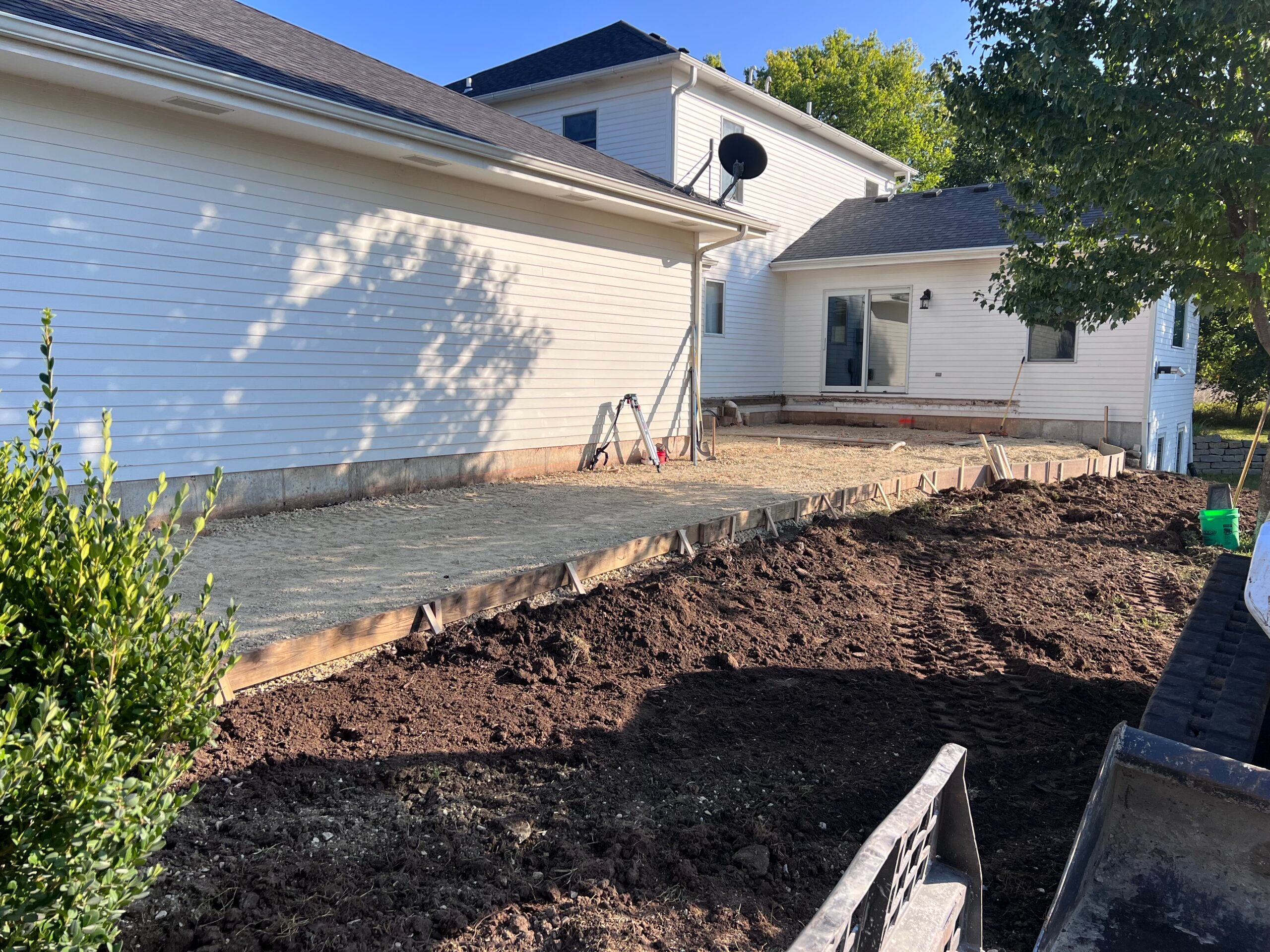
Walkthrough and Grade Check
We measure the slope, check where water runs and mark out the wall with you.
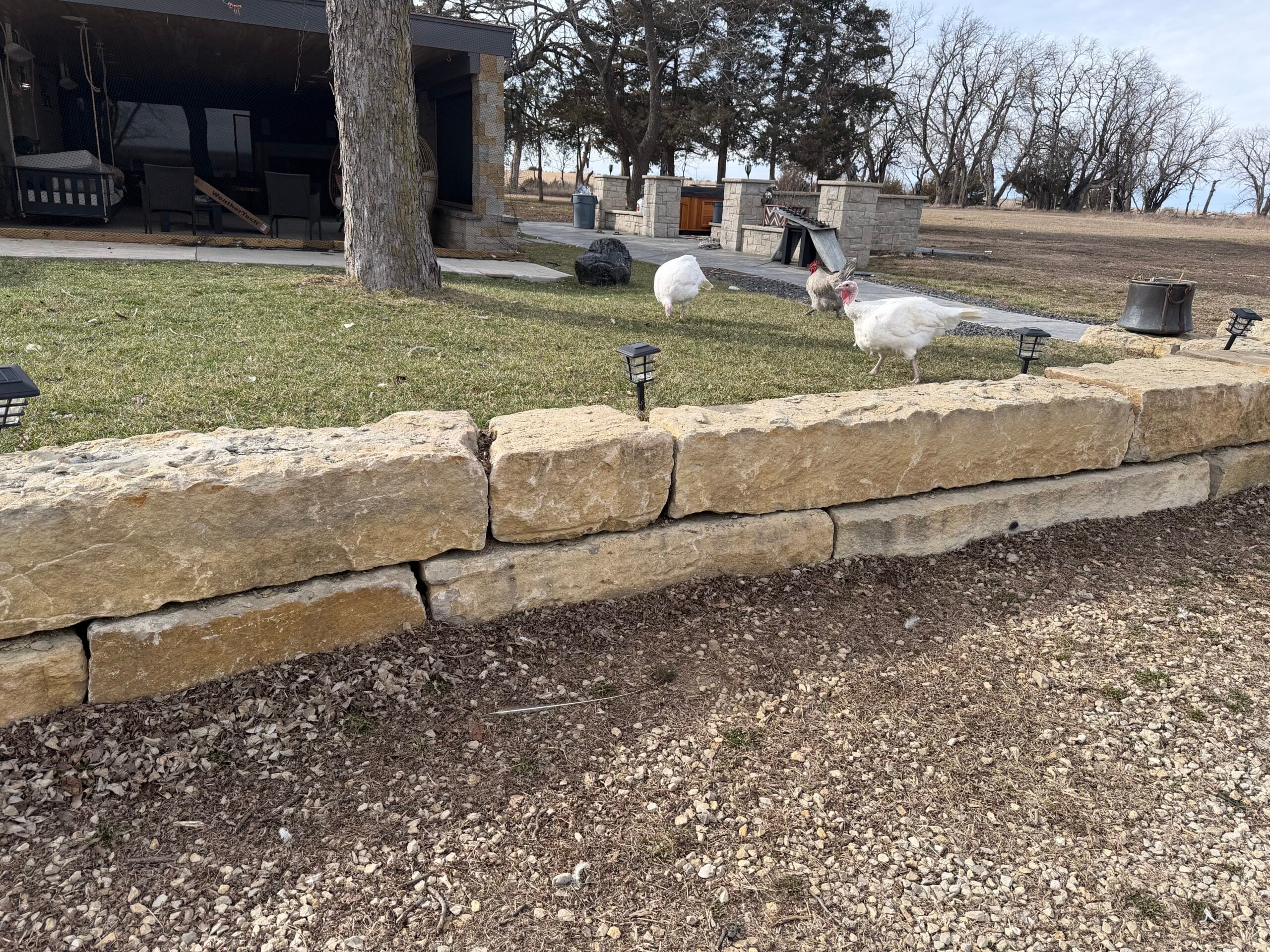
2
Excavation and Leveling Pad
We dig the trench, compact a gravel leveling pad and set the first course below grade.
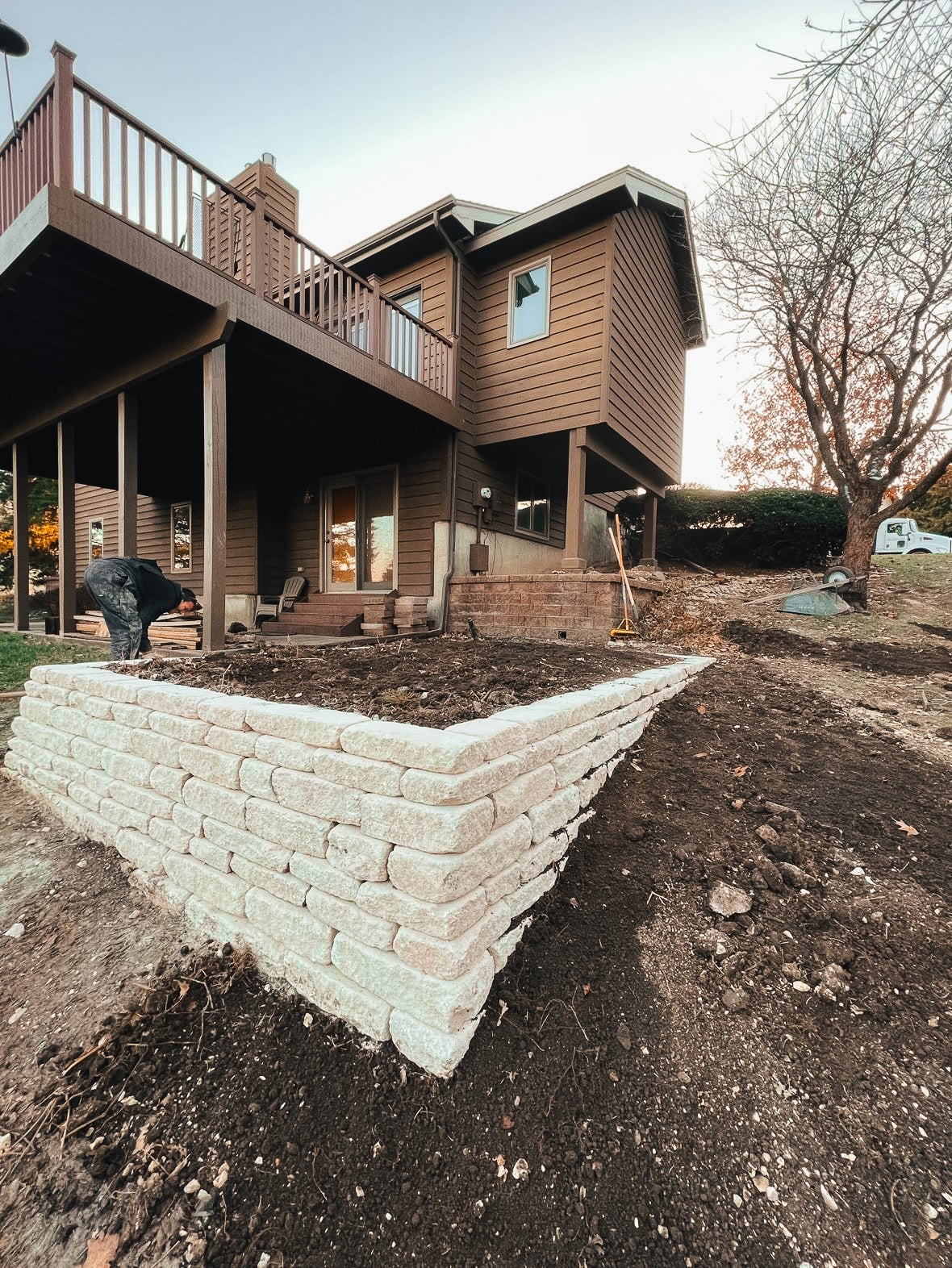
3
Block, Stone and Drain Pipe
We stack and set back each course, with drainage stone and a perforated pipe behind it.
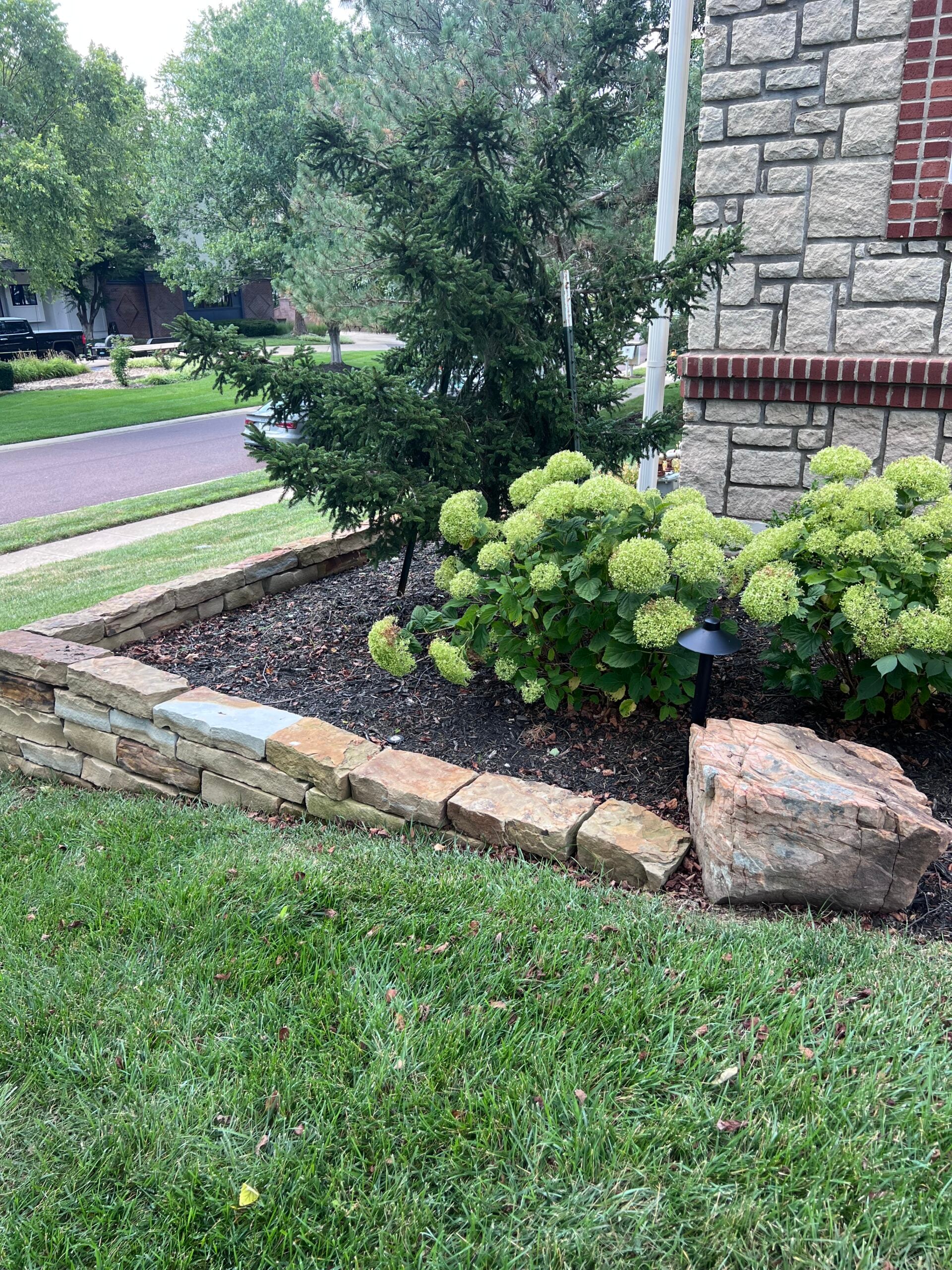
4
Backfill, Cap and Cleanup
We backfill in layers, glue the caps and clean up before the final walkthrough.
Retaining Wall Cost in Johnson County
Typical Kansas City area ranges for 2026. Walls are priced by the face area (length times height), and height, access and drainage move the price most.
| Project | Typical range | What that covers |
|---|---|---|
| Block retaining wall | $15 to $40 per face sq ft | Excavation, compacted leveling pad, block, drainage stone, drain pipe and caps. Kansas averages about $27. |
| Short garden or border wall | $40 to $200 per linear ft | A wall around 2 feet tall for beds, borders or a small grade change. |
| Walls over 4 feet | add $200 to $500+ for design | Engineered plans from a Kansas-registered engineer and geogrid, plus a city permit. |
What Retaining Wall Customers Say
4.9 on Google from 41 reviews.
Retaining Walls Across Johnson County
In Leawood and north Overland Park, many walls built in the 1980s and 1990s are reaching the end of their life, and replacement usually beats repeated repairs. In Stilwell, Spring Hill and south Olathe, newer lots are often graded with a slope that needs a wall to make the backyard usable. On acreage around Bucyrus and Louisburg, walls usually hold back a hillside or stop erosion along a drive.
Retaining Wall Questions
How much does a retaining wall cost in Johnson County?
Kansas City area block retaining walls usually run about $15 to $40 per square foot of wall face, including excavation, base, block, drainage stone and caps. A short 2-foot garden wall often runs $40 to $200 per linear foot. Walls over 4 feet add engineered design. You get a written price after a free walkthrough.
Who builds retaining walls in Johnson County?
Modern Collar is a family-owned concrete and hardscape contractor based in Bucyrus, Kansas, rated 4.9 on Google from 41 reviews. We build and replace block retaining walls across Johnson County, including Overland Park, Leawood, Olathe, Stilwell and Spring Hill, with a compacted base, drainage stone and a drain pipe behind the wall.
Why is my retaining wall leaning?
Usually water. Clay soil holds water behind the wall, and without drainage stone and a pipe the pressure pushes the wall over time, especially when it freezes. A thin or missing base, a first course that was not buried, and rotted timber are the other common causes.
Do I need a permit for a retaining wall?
Shorter walls usually do not. In Shawnee, for example, walls up to 4 feet tall, measured from the bottom of the footing, need no permit. Taller walls, and any wall in a right-of-way, drainage easement or floodplain or holding up a driveway or structure, need a permit and plans from a Kansas-registered engineer. Rules vary by city, so check yours before you build.
How tall can a block retaining wall be without an engineer?
About 4 feet, measured from the bottom of the footing, which includes the buried first course. Taller walls need geogrid and engineered plans, or a terraced layout with two shorter walls instead of one tall one.
Can you replace a railroad-tie or timber wall?
Yes. We tear out the old wall, haul it away, rebuild the base and drainage, and build a new block wall in its place.
Can a retaining wall be part of a patio?
Yes. Walls are often what makes room for a level patio on a sloped yard. We plan both together. See paver patios.
Get a Free Retaining Wall Estimate in Johnson County
Call or text (785) 776-1122 or send the form. We will walk the slope with you, check where the water goes and send a written price for the wall.